Power Efficiency Enhancer: Real Savings or Just Lower Current?
AVDTECH Team
Technical Analysis
A Power Efficiency Enhancer can be useful in the right electrical environment, but it is not a universal solution for lower utility bills. Its value depends on what it does internally, the types of loads connected to the system, and how your electricity provider measures and charges for energy.
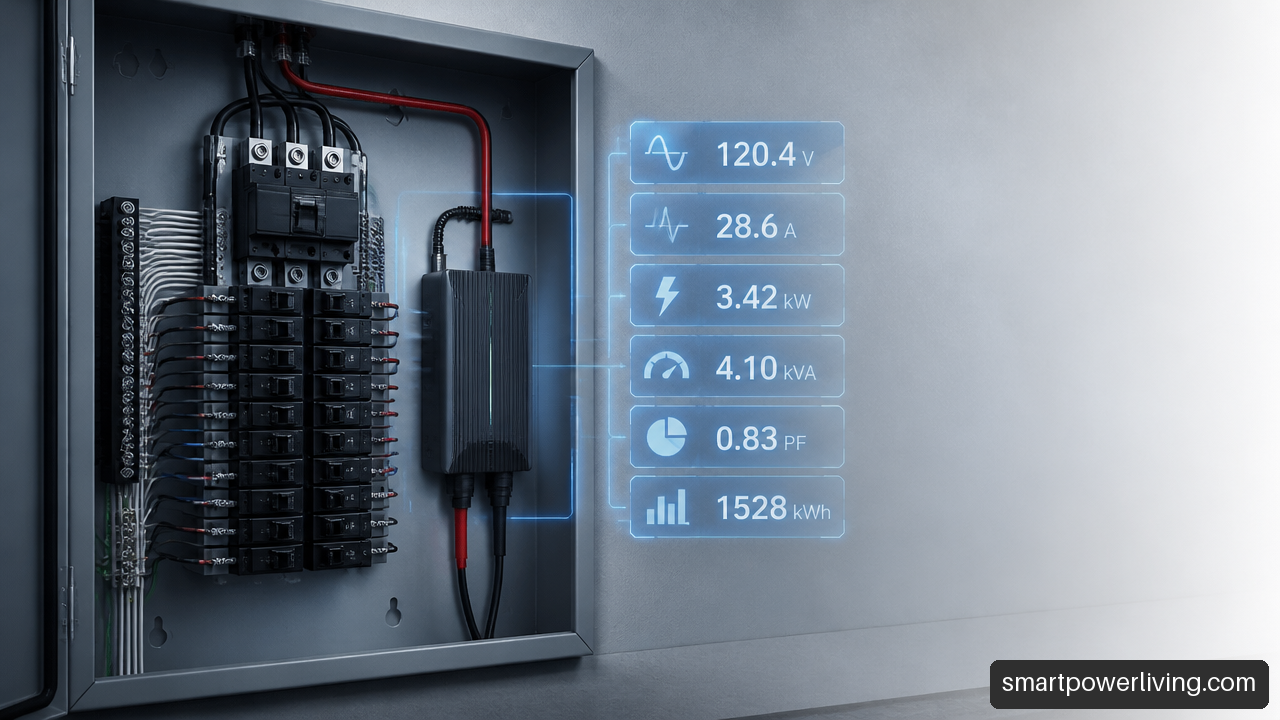
Table of Contents
- Key Takeaways
- How A Power Efficiency Enhancer Works
- When It May Reduce Costs And When It Will Not
- How To Verify Safety And Performance
- Frequently Asked Questions
- Sources And References
Key Takeaways
- A Power Efficiency Enhancer may improve power factor, reduce reactive current, and lower apparent power measured in kVA.
- Lower current can reduce heat losses in conductors and transformers, but it does not automatically mean lower kWh consumption or a lower residential bill.
- The strongest technical case is usually a site with motors, pumps, compressors, welders, or other inductive loads that operate for long periods.
- Most homes with mainly resistive loads, modern electronics, lighting, and inverter appliances may see little or no bill reduction from a capacitor based device.
- Surge protection, voltage regulation, harmonic filtering, and power factor correction are different functions. A device should be evaluated against each claim separately.
- A credible before and after evaluation measures voltage, current, power factor, real power, apparent power, and kWh under comparable operating conditions.
- Mains connected capacitor equipment needs appropriate overcurrent protection, safe enclosure design, and discharge provisions.
How A Power Efficiency Enhancer Works
A Power Efficiency Enhancer is a broad product label. Some products are designed as capacitor based power factor correction devices. Others may combine capacitors with surge suppression components, filtering circuits, or voltage related features. The name alone does not reveal the internal design, rating, or expected result.
For a broader overview of the category, see What is a Power Efficiency Enhancer. The practical question is more specific: what electrical problem is the device meant to solve at your site?
Real Power, Reactive Power, And Apparent Power
Electrical loads use power in different ways. Real power, measured in kilowatts or kW, performs useful work such as producing heat, turning a motor shaft, or operating electronics. Over time, real energy is measured in kilowatt hours, or kWh. For many residential customers, kWh is the main quantity shown on the bill.
Reactive power moves back and forth between the electrical supply and inductive equipment, particularly motors and transformers. It does not directly perform useful work, but the power system still has to carry the associated current. Apparent power, measured in kVA, represents the combined electrical demand created by real and reactive power.
Power factor is the relationship between real power and apparent power. A value closer to 1.0 means that more of the current is doing useful work. A lower value means the system is carrying more reactive current for the same real output.
A lower amperage reading is not, by itself, proof of lower energy consumption. The relevant bill saving measure is lower kWh over a comparable period.
A capacitor based device supplies reactive power locally. That can offset part of the reactive demand from inductive loads, reducing the current that must travel through upstream wiring. In the right conditions, this reduces I²R losses, which are heat losses that rise with the square of current. It can also free capacity in transformers, switchgear, and conductors.
Why Motors Are The Main Use Case
Consider a small workshop with several induction motors: a water pump, air compressor, exhaust fan, and refrigeration equipment. When these loads run together, they may draw significant reactive current. Correcting power factor near the load can reduce the current flowing in the facility distribution system.
That does not mean every motor site will see the same savings. A motor that runs only a few minutes each day creates a different opportunity than a compressor that operates for 12 hours. Load size, duty cycle, existing power factor, wiring length, tariff structure, and device sizing all matter.
For facilities with recurring motor loads, Power Factor Correction Explained provides useful background on matching correction equipment to the electrical system rather than treating it as a plug in shortcut.
What It Does Not Automatically Do
Some sales descriptions combine several benefits into one promise: lower bills, voltage stabilization, surge protection, cleaner electricity, and longer equipment life. Each benefit requires a different mechanism and should be supported by different measurements.
A capacitor can correct power factor. A surge protective device is designed to limit short duration overvoltage transients. A voltage regulator controls voltage variation within its operating range. Harmonic filtering requires equipment designed and rated for the specific distortion present. These functions may exist in one engineered system, but one feature should not be assumed from another.
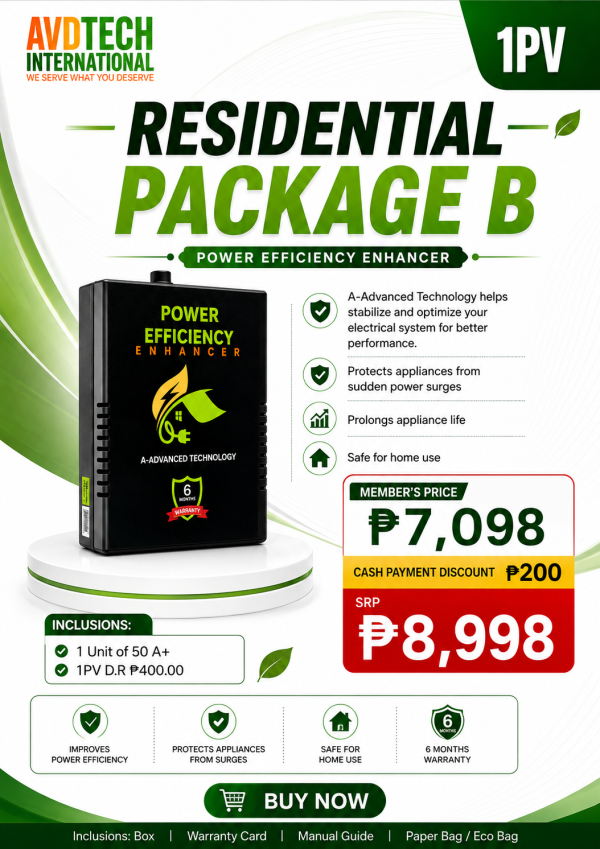
A Philippine marketplace listing presents the product as a conservation device with power saving claims. That confirms how the category is marketed locally, not independent proof that every installation will achieve the same result.
When It May Reduce Costs And When It Will Not
The direct answer is simple: a Power Efficiency Enhancer may reduce costs where reactive power, current related losses, or demand charges materially affect the bill. It may not reduce a normal household bill when the home is billed primarily for kWh and has little inductive load.
The Difference Between Lower kVA And Lower kWh
This distinction matters because a device can produce a real electrical change without producing a meaningful billing change.
- Current (A) — Current flowing in a conductor. May decrease with inductive loads. Does not prove bill savings.
- Power factor — How effectively current supports real work. May improve. Does not prove bill savings.
- Apparent power (kVA) — Combined electrical loading. May decrease. Only relevant where tariff or capacity conditions make it so.
- Real power (kW) — Instantaneous useful power. Usually changes little unless losses fall. Not alone proof of savings.
- Energy (kWh) — Energy accumulated over time. Must decline for a typical kWh bill to fall. Yes, this is the metric that matters.
Suppose a business operates a 10 kW motor load at a poor power factor. Correcting the power factor may reduce current and apparent power while the motor still needs almost the same real power to do the same mechanical work. Any kWh reduction may come mainly from lower wiring and transformer losses, not from the motor suddenly needing less work.
That distinction is especially important for household buyers. A heater, rice cooker, electric kettle, and traditional resistive appliance already operate close to unity power factor. Adding a capacitor cannot meaningfully improve what is already near the practical limit. Many modern appliances also have built in electronic power factor correction or variable speed controls, which can make a generic add on device less relevant.
Typical Household Versus Business Loads
- Home with lighting, cooking loads, televisions, and chargers — Often limited opportunity. Focus first on appliance use, cooling settings, insulation, and verified kWh tracking.
- Home with large pumps, older air conditioning units, or workshop motors — Possible, but site specific. Measure power factor and kWh during motor operation.
- Small store with refrigeration, compressors, and ventilation motors — Potentially meaningful. Review load profile and tariff with a qualified electrical professional.
- Factory with multiple motors and transformer capacity concerns — Often stronger case. Perform a power quality assessment and engineer a properly sized correction system.
A second marketplace listing claims power factor correction, lower demand, and reduced losses. Those outcomes can be technically plausible for an inductive load, but the claim still needs to match the customer's meter, tariff, and operating conditions.
Billing Rules Matter More Than Marketing Language
Commercial and industrial customers may face demand charges, power factor provisions, or capacity limits in addition to energy charges. In these cases, lower kVA or reduced reactive demand can have financial value even when kWh changes only modestly.
Residential billing is often more straightforward: if the meter records mainly kWh, then the strongest proof of savings is a repeatable reduction in kWh after controlling for weather, occupancy, appliance use, and operating hours. A lower clamp meter reading is useful diagnostic information, but it is not the final financial metric.
Seller pages that claim improved power factor, lower bills, and efficiency gains should be treated as performance targets that require site specific validation, particularly when savings percentages are presented without a documented test method.
A Practical Decision Rule
I recommend separating the decision into three questions:
- Is there a measurable power quality or power factor problem? A qualified measurement should establish this before equipment is selected.
- Does the utility tariff reward correction? Review the bill for demand, reactive energy, or power factor related charges.
- Can the device be safely matched to the load? Capacitors that are too large or poorly applied can create leading power factor conditions, switching transients, or issues with harmonics.
For business sites, the decision should be part of a larger energy plan. Power Efficiency for Businesses can help frame power factor correction alongside load management, maintenance, efficient motors, controls, and operating schedules.
How To Verify Safety And Performance
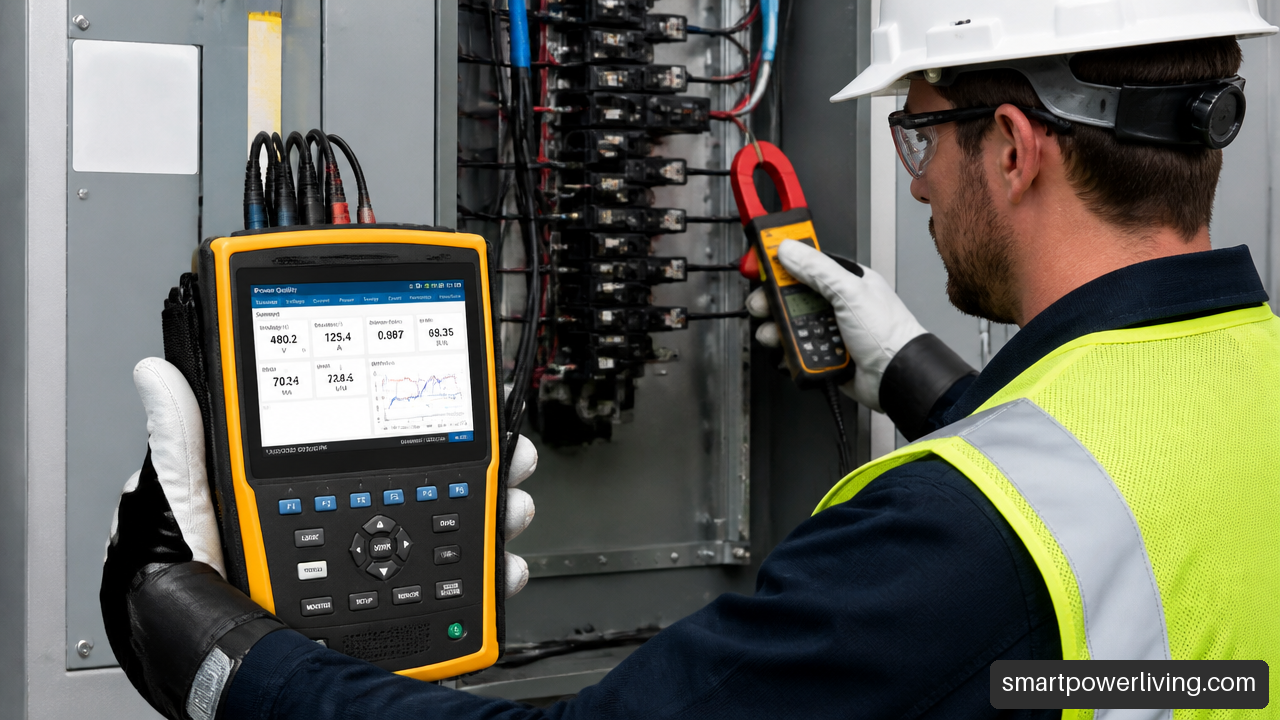
A trustworthy evaluation starts before installation. Ask for electrical specifications, not just projected savings. At minimum, a seller or installer should be able to state the rated voltage, frequency, capacitor capacity if applicable, current rating, protection method, enclosure rating, and intended installation location.
A Before And After Test That Means Something
A useful test compares the same operating conditions. If a shop's refrigeration load is measured during a quiet week and then compared with a busy week, the result may reflect sales volume and door openings rather than the device.
Use a power quality meter, revenue grade submeter, or suitable wattmeter to record the following values during comparable load periods:
- Voltage
- Current
- Power factor
- Real power in kW
- Apparent power in kVA
- Energy consumption in kWh
- Operating hours and major equipment status
For a motor driven site, measurements should include normal operating cycles. For example, compare several days when the same pumps, compressors, or cooling equipment run on similar schedules. If kVA and current improve but kWh does not materially change, the device may still be improving capacity utilization, but it is not delivering the expected energy bill result.
Safety Checks For Mains Connected Equipment
Fair warning: capacitor equipment can retain electrical charge after power is removed. Proper designs use discharge resistors so stored energy falls to a safer level after shutdown. They also need correctly rated fuses or circuit breakers for overcurrent protection.
A safe installation should also address these points:
- Correct voltage and frequency rating for the local supply
- Proper conductor sizing and secure terminations
- Suitable enclosure and grounding arrangement
- Isolation for servicing
- Protection against capacitor failure and fault current
- Harmonic assessment where many variable speed drives, UPS units, welders, or nonlinear loads are present
Avoid opening or modifying a sealed unit. Avoid placing a device on a circuit that exceeds its rated current. For panel mounted equipment, use a qualified electrician or electrical engineer who can verify protective coordination and local code requirements.
Claims About Surges And "Dirty Electricity"
A true surge protective device is evaluated by its surge protection characteristics, installation location, and grounding system. A device marketed mainly for efficiency should not replace a dedicated surge protection strategy unless it clearly states that it includes properly rated surge protection components.
The phrase dirty electricity is not consistently defined in product marketing. It can refer broadly to electrical noise, voltage disturbance, or harmonics, but these are separate measurable conditions. A credible claim should identify the metric: total harmonic distortion, transient voltage, switching noise, or another recognized power quality measurement.
Public discussions show why this separation matters. In community discussions about power saving devices, commenters expressed skepticism and noted that any current reduction would be most plausible with inductive loads. Similarly, electricians' discussions of bill saving claims reflect doubt about whether the pictured device can lower ordinary electricity bills. These are community opinions, not laboratory results, but they point to the right verification question: show the measured kWh result under controlled conditions.
Frequently Asked Questions
What Is A Power Efficiency Enhancer?
It is a broad name for equipment marketed to improve electrical efficiency. In many cases, it refers to a capacitor based power factor correction device. Some products also claim surge suppression, voltage stabilization, or filtering functions. The exact capability depends on the documented design and ratings.
Does A Power Efficiency Enhancer Really Lower My Electricity Bill?
It can, but not automatically. Savings are most plausible where power factor correction reduces billed demand, reactive power charges, or meaningful distribution losses. For a home billed mostly by kWh with mostly resistive or already efficient loads, the bill reduction may be small or nonexistent.
Will It Help In A Typical Philippine Household?
Usually, the answer depends on the load mix. A household dominated by cooking appliances, lighting, televisions, and chargers may have limited opportunity. A home with long running pumps, older motor loads, or a small workshop may justify measurement first. Compare kWh across similar usage periods before deciding it works.
Is It The Same As A Capacitor Bank?
Not always. A capacitor bank is a defined form of power factor correction equipment. A Power Efficiency Enhancer may contain capacitors, but it may also include other components or simply use broad marketing language. Ask for the capacitor rating, connection method, protection design, and technical documentation.
Does It Protect Against Surges Or Voltage Spikes?
Only if it includes appropriately rated surge protection hardware. Power factor correction alone does not provide the same function as a dedicated surge protective device. For sensitive electronics, use a protection approach designed specifically for transient overvoltage risks.
Can I Test It Myself?
You can track utility meter or submeter kWh and record appliance operating hours, but a meaningful electrical assessment often needs a proper wattmeter or power quality meter. Do not work inside a panel or connect mains equipment unless you are qualified to do so. The safest approach is to have a licensed professional collect and interpret the readings.
Is It Worth Buying For A Small Business?
It may be worth assessing if the business uses refrigeration, pumps, compressors, fans, or other motors for long hours. First review the tariff and measure power factor during normal operations. If there is no demand or reactive power financial exposure and no measurable kWh improvement, other efficiency measures may offer a clearer return.
Sources And References
This article synthesizes publicly available product listings, community discussions, and established electrical engineering principles regarding power factor correction, surge protection, and power quality measurement. Always consult a licensed electrician or energy professional for site specific advice.