Stabilised Power Supply Reviews (2026): The Real-World Value of a Power Efficiency Enhancer for Homes and Businesses
AVDTECH Team
Product Reviews
In 2026, 176 TWh of electricity is used by data centres, and that kind of load pressure is exactly why stabilised power supply solutions are becoming a practical necessity rather than an optional upgrade.
Key Takeaways: Stabilised Power Supply, Explained Simply
- Best fit — Homes, small businesses, and facilities with sensitive equipment that needs stable output.
- What it improves — Power stabilization, smoother power, and equipment protection through smarter power efficiency.
- Power Efficiency Enhancer angle — AVDTECH offers monitoring and predictive maintenance alongside power efficiency claims.
- How to choose — Match current capacity (for example, 50A+ or 100A+), then confirm integration and monitoring needs.
- Where to start — Review the product line, then learn the fundamentals in our Product Knowledge.
A few common questions worth addressing up front:
- Is a whole house voltage regulator always the answer? Not necessarily, especially if your main need is consistent power stabilization plus monitoring for efficiency trends.
- Will a voltage regulator for entire house protect appliances? The goal is appliance protection, but selection depends on load profile and installation approach.
- Do I need a voltage regulator 220v specifically? Many setups focus on stabilised output for mainstream loads, but we always recommend confirming compatibility with your supply and equipment requirements.
- Where does 'igbt voltage regulator' fit? It is often referenced in regulator discussions, but what matters in 2026 is the stability performance, control strategy, and real monitoring for your environment.
Quick shortlist of AVDTECH packages to consider:
- Residential Package — for modern homes seeking smoother power and lower electric bills.
- Commercial Package — for equipment protection and easy integration.
- Industrial Package — for continuous heavy loads, remote monitoring, and scalable deployment.
- 100A+ Power Efficiency Device — when you need higher capacity and real-time monitoring.
What a Stabilised Power Supply Does (and What 'Power Stabilization' Really Means in 2026)
A stabilised power supply is built to keep power output steadier under real-world conditions, where demand changes and electrical quality can vary. In practice, that usually means smoother power delivery and better protection for sensitive loads.
By 2026, many buyers are also looking for a combined outcome: not just stability, but measurable energy optimisation. That is where the 'Power Efficiency Enhancer' approach becomes relevant, because the system goal is to support stable operation while also addressing efficiency drivers.
Why people move from 'simple regulation' to whole-home thinking
When readers search for whole house voltage regulator or voltage regulator for entire house, they usually mean one thing: consistent performance across the loads they care about. However, the best match depends on whether your priority is a residential whole home automatic voltage regulator style solution, or whether you need a broader stability and efficiency setup for heavier commercial or industrial operation.
- Residential needs: smoother power for appliances, plug-and-play setup preference, and bill reduction expectations.
- Commercial needs: equipment protection, easy integration, and energy optimisation for ongoing operations.
- Industrial needs: continuous heavy loads, remote visibility, and predictive maintenance planning.
Our Product Reviews: Stabilised Power Supply Options from SMART Power Living (AVDTECH)
We evaluate stabilised power supply offerings based on clarity of intended use, capacity fit, and whether the package includes the monitoring features that help you manage power stabilization over time.
All the options below are presented as AVDTECH Power Efficiency Enhancer solutions, including residential, commercial, industrial, and a higher-capacity 100A+ device.
1) AVDTECH 100A+ Power Efficiency Device (flagship for heavier loads)
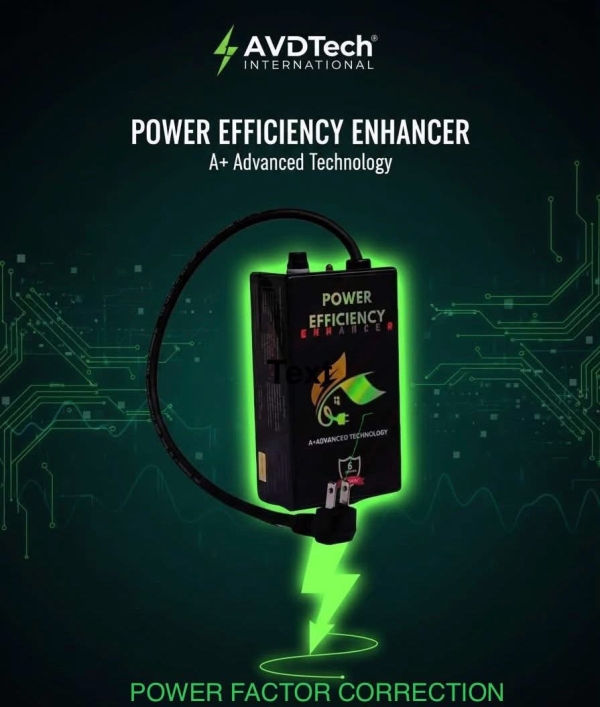
The 100A+ Power Efficiency Device is positioned as the flagship AVDTECH 'Power Efficiency Enhancer' for heavier loads. The product description highlights smoother power delivery, appliance or equipment protection, and intelligent monitoring, supported by a cloud dashboard and predictive maintenance.
- Key promise: up to 45% cost reduction (as stated on the product page) with smoother power and protection.
- Capacity focus: 100A+ rated current, aimed at larger electrical loads.
- Monitoring: real-time monitoring and a cloud dashboard, designed to help you keep an eye on performance.
- Maintenance approach: predictive maintenance to reduce uncertainty around uptime.
If you are weighing a voltage regulator for entire house or whole-home approach for higher demand environments, this is the kind of stabilised power supply class that aligns with those expectations. It also maps well to readers exploring more technical regulator discussions, including igbt voltage regulator concepts, though the product's emphasis is on system outcomes plus monitoring.
AVDTECH 100A+ Power Efficiency Device, in Detail
Why it stands out: this device is designed for performance under heavier load conditions, while also offering the data layer most buyers increasingly expect in 2026. The combination of stabilized performance messaging and monitoring features is what differentiates it from a basic 'set it and forget it' voltage regulator approach.
Who it is for: facilities and larger homes (or mixed-use properties) where power quality and stability are critical, and where we expect demand swings that benefit from continuous visibility.
"1.5-2 years is the average gap in 'time-to-power' expectations between utilities and data center hyperscalers in 2026."
— Bloom Energy 2026 Power Report
Residential Package Review: Stabilised Power Supply for Homes, Not Just Theory
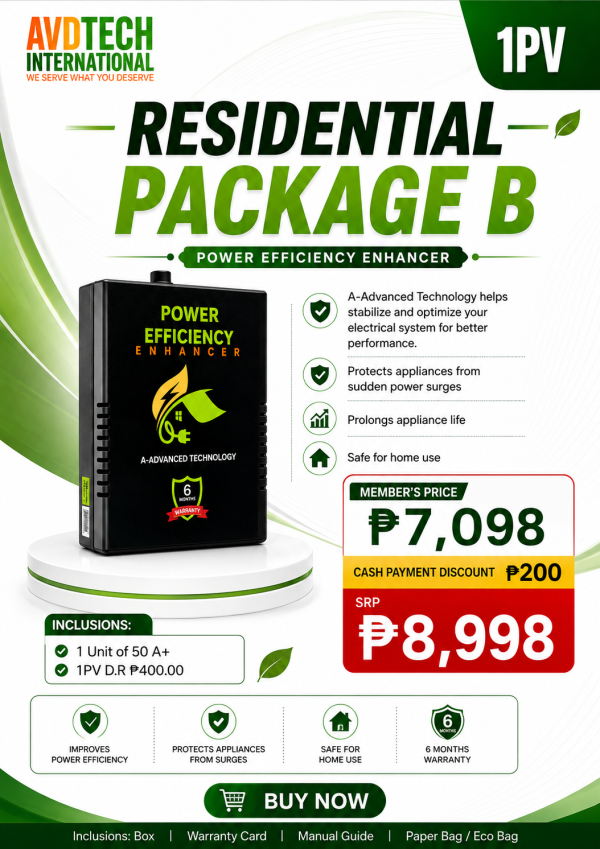
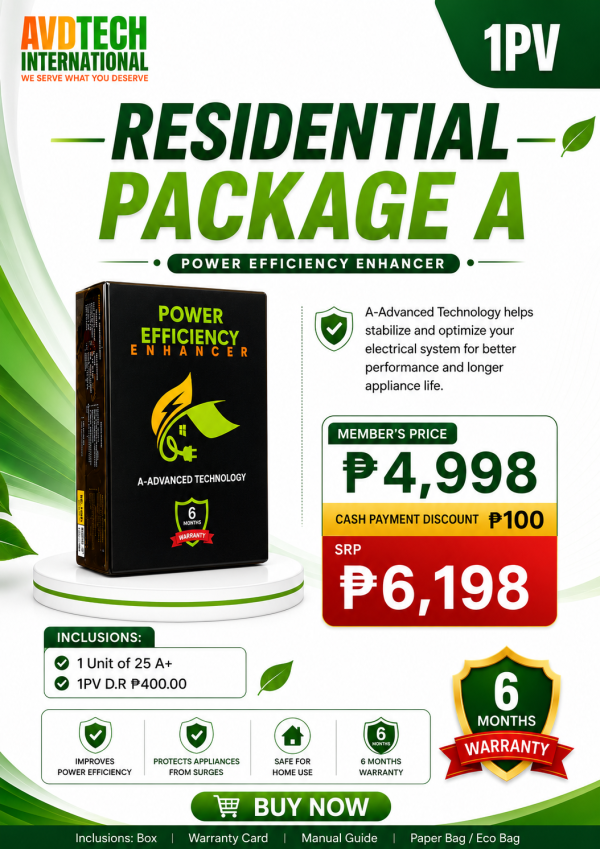
The Residential Package is the most straightforward entry point for buyers who want a stabilised power supply concept applied to home-level usage. It is presented as plug-and-play, with appliance protection and claims around improved electricity bills.
What we like about the Residential Package approach
- Built for the modern home: the goal is smoother power and protected appliances.
- Plug-and-play setup: we treat this as a practical preference for 2026, because many buyers want simple installation pathways.
- Efficiency angle: it is marketed with 'Power Efficiency Enhancer' outcomes, including higher efficiency and potential cost reduction.
If you have been comparing voltage regulator 220v options or looking for a whole home voltage regulator style result, the Residential Package is worth considering as a packaged solution rather than a single regulator component.
Commercial Package Review: Stabilised Power Supply for Equipment Protection and Integration
The Commercial Package is aimed at stores, offices, and commercial operations where equipment protection and energy optimisation matter day after day. It is presented as a commercial-grade capacity option with easy integration.
How it supports commercial stabilised power supply needs
- Equipment protection: smoother power is positioned as a protective factor for connected equipment.
- Energy optimisation: framed around reducing operating costs through efficiency outcomes.
- Easy integration: the product page describes integration support so commercial buyers can implement without overcomplicating the setup.
For readers searching for voltage regulator for entire house equivalents but running commercial systems, this is the category alignment. It is closer to 'whole business' protection than a purely residential, appliance-focused regulator solution.
Industrial Package Review: Stabilised Power Supply for Continuous Heavy Loads
The Industrial Package is designed for factories and commercial facilities with continuous, high-demand loads. The product description emphasises heavy-duty capacity, remote monitoring, predictive maintenance, and scalable deployment, which is exactly what many industrial buyers expect in 2026.
Why industrial buyers pay attention to power stabilization
Industrial environments tend to suffer when power quality changes, because uptime impacts output. That is why remote monitoring and predictive maintenance are central elements in the Industrial Package description.
- Heavy-duty capacity: positioned as 50A+ class performance.
- Remote monitoring: cloud-connected dashboard for visibility across time.
- Predictive maintenance: designed to reduce surprise downtime through better planning.
- Scalable deployment: built to support multi-site or expanding facilities.
If you are evaluating a stabilised power supply for industrial racks, HVAC loads, processing equipment, or any continuous load profile, this package is the most consistent fit within the provided lineup.
"888 miles of new 345-kV+ transmission were built in the U.S. last year, far short of the 5,000 miles per year recommended by the DOE."
— Grid Strategies, National Load Growth Report
How to Choose the Right Stabilised Power Supply (Residential, Commercial, or Whole Home Voltage Regulator)
Choosing the right stabilised power supply is mostly about matching capacity and use-case. Buyers frequently search for whole house automatic voltage regulator and whole home voltage regulator, but we recommend treating stability and efficiency as a combined requirement rather than hunting one spec alone.
Step-by-step selection checklist
- Start with your load profile: Are you protecting appliances, commercial equipment, or continuous industrial demand?
- Confirm capacity needs: Use the package intent and capacity tier, for example, Residential versus Industrial (50A+ class) versus the 100A+ device.
- Decide how much monitoring you want: If you value predictive maintenance and real-time monitoring, prioritise systems that include cloud dashboards and ongoing visibility.
- Plan for installation style: For home setups, plug-and-play matters. For facilities, integration and scalable deployment matter.
- Align with your outcome goals: If lower electric bills and 'Power Efficiency Enhancer' outcomes are important, compare packages on those stated goals.
When readers ask whether they should buy a voltage regulator 220v style solution versus a broader system, the right answer depends on whether their priorities are basic regulation or full power stabilization with efficiency support and monitoring.
Power Efficiency Enhancer Features to Look For (Not Just Voltage Numbers)
In 2026, many buyers are already aware that 'voltage regulation' alone may not address the full picture of stability and efficiency. That is why we focus on the Power Efficiency Enhancer feature set, where monitoring and system intelligence make the outcome more practical.
Feature areas that matter
- Real-time monitoring: helps you understand what is happening, not only what should happen.
- Predictive maintenance: reduces uncertainty for uptime-heavy environments.
- Cloud dashboard access: supports ongoing review across time, especially useful for multi-site deployment.
- Efficiency and cost reduction claims: the product pages describe outcomes such as higher efficiency and cost reduction potential.
If you are investigating whole-home stability terms like power stabilization or whole house voltage regulator, we recommend asking how the system supports ongoing performance rather than only how it stabilises once installed.
Product Knowledge: Learn the Electrical Basics Behind Power Factor and Power Quality
One reason stabilised power supply decisions fail is that buyers skip the fundamentals. Our Product Knowledge area is designed as an 'Official Technical Academy' style training resource, focused on electrical efficiency, power factor correction, and power quality improvement.
What the training covers
- Power factor calculation and module breakdowns.
- Capacitors as the foundation, including 'What is a Capacitor?' and 'What is a Bank Capacitor?'
- Physics, optimisation, and a deep dive into hardware modules.
If you have been comparing stabilised power supply systems and wondering where voltage regulator for house logic intersects with power factor correction, this learning path helps you evaluate the 'why' behind the approach.
Practical Installation and Use Notes (What to Plan Before You Buy)
Even the best stabilised power supply solution needs a sensible plan. We recommend confirming installation requirements, electrical fit, and the integration path with your existing equipment.
- For homes: prioritise plug-and-play setup details and appliance protection goals.
- For businesses: confirm commercial-grade capacity expectations and integration steps.
- For industrial sites: plan for multi-site monitoring and predictive maintenance workflows.
"Note: Our Terms of Service explain that product content on the website is provided for education and awareness purposes only. For purchase and installation decisions, confirm details directly with an authorized distributor during your inquiry."
To understand how we present product information, review our Terms of Service before placing any reliance on educational descriptions.
Conclusion: Is a Stabilised Power Supply Worth It in 2026?
In 2026, a stabilised power supply is increasingly judged by what it delivers beyond basic voltage control. Across the AVDTECH lineup reviewed here, the strongest value comes from the Power Efficiency Enhancer approach, where smoother power, equipment protection, and real monitoring support more confident power stabilization decisions.
If you need a home-ready solution, the Residential Package aligns with plug-and-play priorities. If you run equipment-heavy operations, the Commercial Package is the better match, and for continuous heavy loads, the Industrial Package provides the monitoring and scalable deployment focus that industrial buyers look for. For higher current class requirements, the 100A+ Power Efficiency Device is the flagship option in this review.
Frequently Asked Questions About Stabilised Power Supply
Is a stabilised power supply worth it in 2026 for a home?
Yes, if your goal is power stabilization for appliance protection and you want a system approach that aligns with a Power Efficiency Enhancer outcome. In 2026, the most practical home choice is the Residential Package style setup, especially when plug-and-play installation is important.
What is the difference between a voltage regulator for house and a whole house voltage regulator?
A voltage regulator for house typically targets smaller or more limited loads, while a whole house voltage regulator is intended to support stability across broader home usage. With a stabilised power supply approach, we focus on smoother power plus monitoring, which can be more helpful than simple regulation alone.
Do I need a voltage regulator 220v specifically for stabilised power supply results?
It depends on your supply and the equipment you are protecting. Many buyers search for voltage regulator 220v because their connected loads match common mains expectations, but stabilised power supply performance always needs compatibility confirmation before purchase.
Which is better for a business, a whole home voltage regulator or a commercial stabilised power supply package?
For business environments with equipment protection needs, a commercial package is usually the more accurate fit because it is designed for commercial-grade operation and integration. A whole home voltage regulator can be useful, but it often does not match the monitoring and efficiency priorities commercial teams require.
How does a Power Efficiency Enhancer help with power stabilization?
A Power Efficiency Enhancer is positioned to support smoother power delivery while also targeting efficiency outcomes that reduce operating cost potential. In 2026, features like real-time monitoring and predictive maintenance matter because they help you manage power stabilization over time.
Is an industrial stabilised power supply solution overkill if we only have a few machines?
It may be overkill if your load is light and you only need basic appliance-level protection. However, if your machines run continuously or you need remote monitoring and predictive maintenance planning, the Industrial Package approach can still be appropriate for stability and uptime.
What should I check before buying a voltage regulator for entire house?
Check your load profile, confirm compatibility with your supply, and make sure the system supports the power stabilization outcomes you want. If you also want Power Efficiency Enhancer-style benefits and ongoing visibility, compare packages on monitoring and maintenance features, not just output specs.
Final Note
We aim to keep stabilised power supply reviews clear and decision-ready. For education and awareness purposes, continue reviewing our Product Knowledge resources, and use the product pages for capacity fit when planning your 2026 upgrade.